|
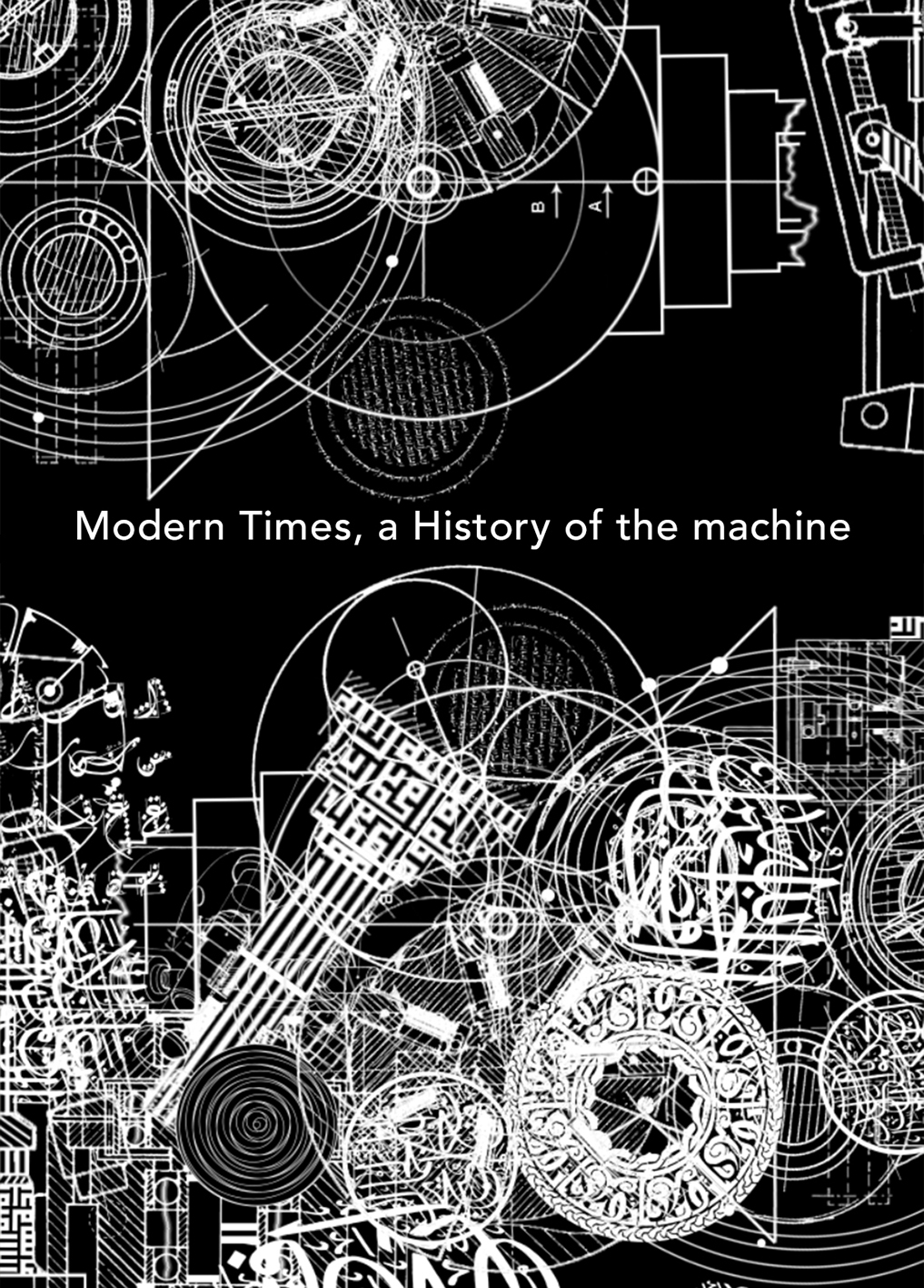
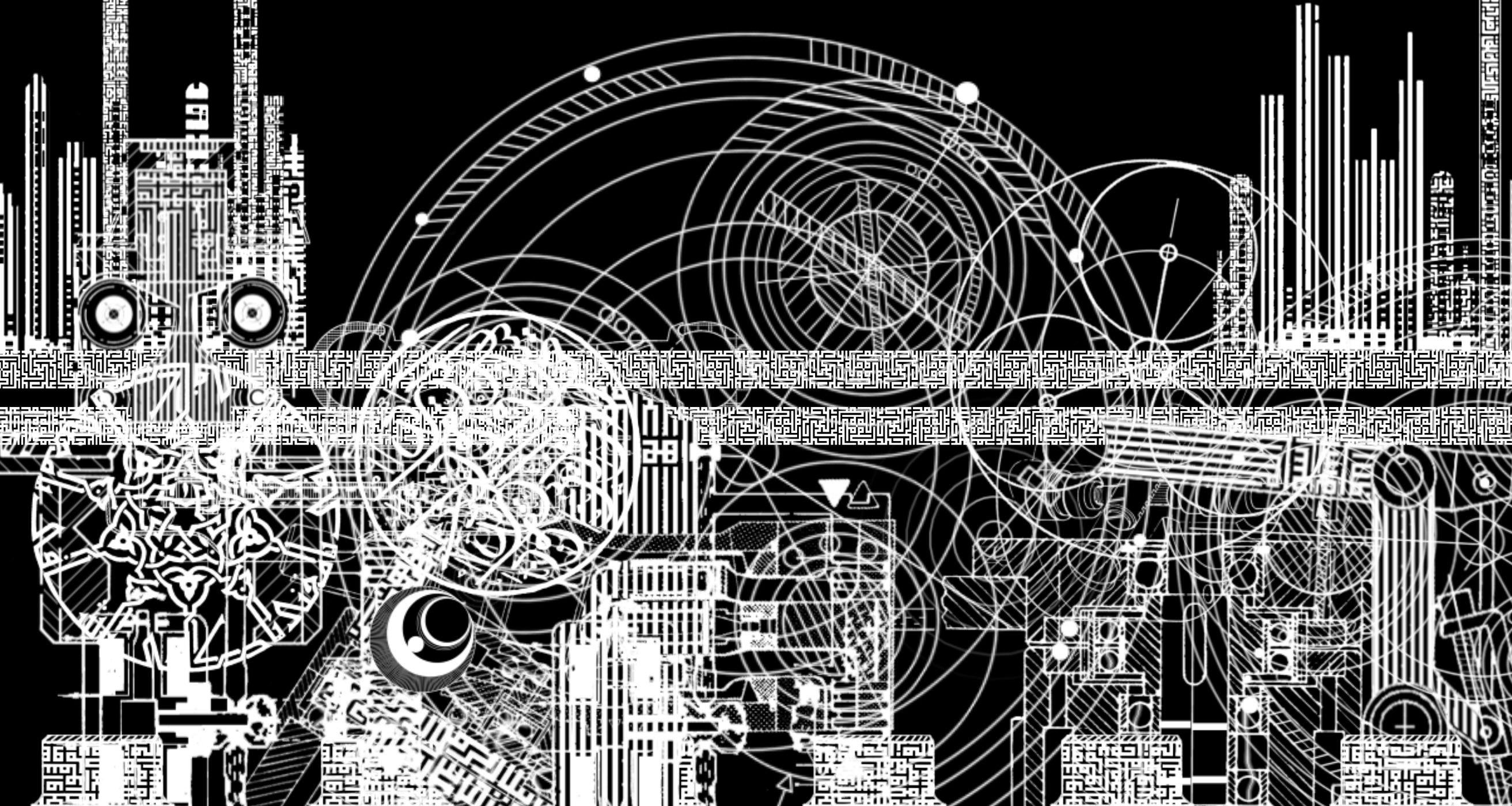
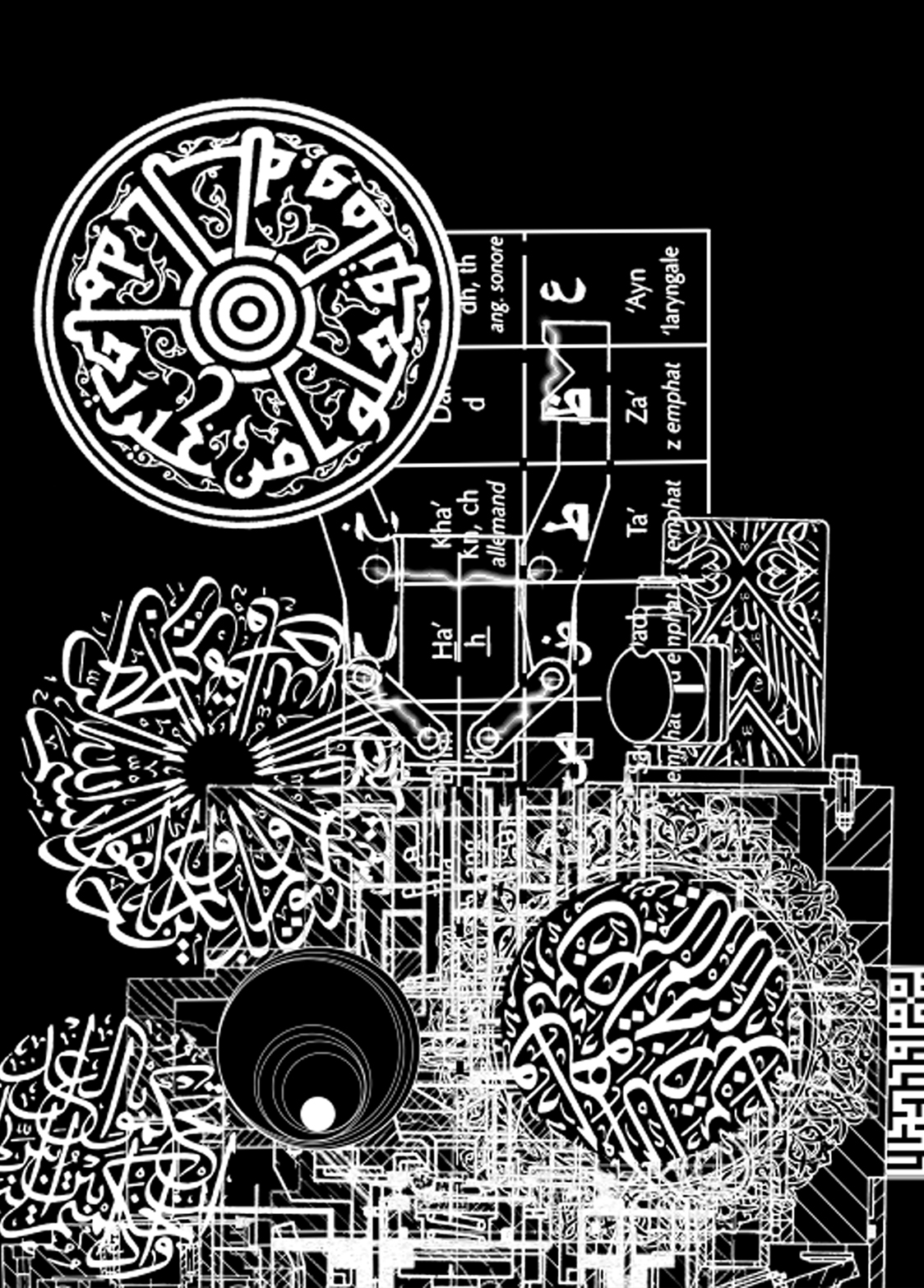
Réalisée entre 2010 et 2012, Modern Times, a History of the Machine, The Fall prolonge et clôt le projet amorcé par mounir fatmi en 2009. Sur fond noir, des lignes blanches s’entrecroisent, des cercles tournent en sens contraires et des motifs calligraphiques s’inscrivent dans un réseau de formes qui évoque tour à tour un dessin industriel et un plan d’architecture. Le bruit des moteurs donne à cet assemblage la cadence d’un appareil en fonctionnement. Le regard suit les rotations, tente de saisir les rapports entre les pièces et cherche, dans la prolifération des signes, le principe qui règle l’ensemble.
Dans la première installation, la référence aux Temps modernes de Charlie Chaplin ouvrait une réflexion sur la machine industrielle et sur la manière dont elle impose son rythme aux corps. The Fall étend cette interrogation à l’espace que nous habitons. Les pouvoirs politiques se sont depuis longtemps servis de l’architecture pour mettre en scène leur autorité et l’exercer au quotidien. L’échelle d’un monument impose une distance. Le tracé d’une enceinte ou la disposition des accès détermine qui peut entrer, circuler ou rester à l’écart. La solidité de l’édifice prête à cette hiérarchie une apparence de permanence.
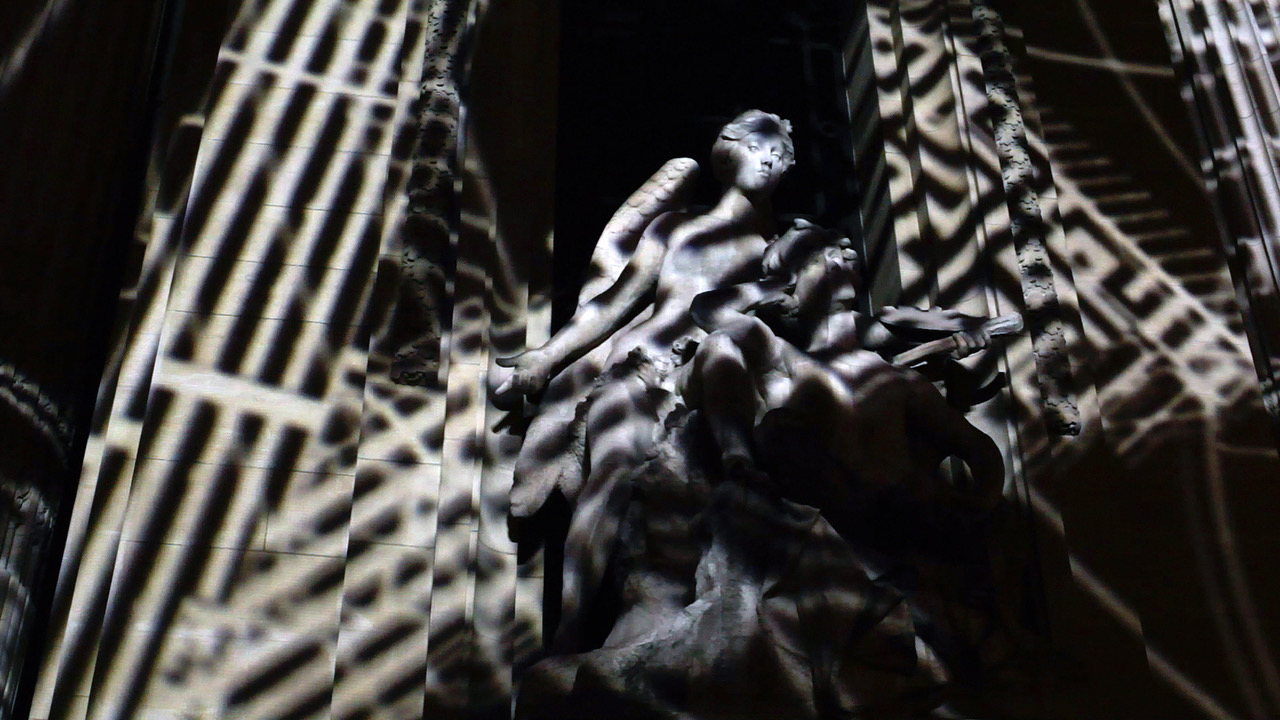
Présentée pour la première fois sur la façade du Grand Palais lors d’Art Paris en 2015, l’installation donne à cette question une dimension concrète. Les engrenages projetés se superposent aux lignes du bâtiment et en modifient la lecture. La façade semble prise dans le mouvement des figures qui la traversent. Le spectateur continue de percevoir la masse de l’édifice tout en voyant ses divisions se recomposer sous l’effet de la lumière. La chute se joue déjà dans cet écart. Ce qui paraissait fixe et solide devient momentanément incertain et fragile, et l’architecture, conçue pour affirmer sa durée, se trouve soumise au temps d’une image.
Les rotoreliefs inspirés de Marcel Duchamp éclairent le rôle de l’illusion dans l’œuvre. La rotation d’une figure plane suffit à produire une impression de profondeur. De la même façon, la précision des tracés et la régularité des moteurs donnent à la composition une apparence de cohérence. Pris dans cette cadence, le regard prête une fonction aux formes et suppose qu’une logique les relie. Modern Times, a History of the Machine, The Fall déplace cette expérience vers la croyance dans le progrès technique. À force de voir la machine tourner, on en vient à lui attribuer la capacité de faire tenir tout ce qui dépend d’elle. La fascination qu’exerce la projection fait éprouver cette confiance au moment même où l’image rend l’édifice instable.
La chute désigne ainsi à la fois le devenir d’une construction et l’effondrement de l’idée qui la soutient. Elle peut commencer alors que les murs sont encore debout, dès que se défait la croyance dans l’ordre qu’ils incarnent. L’œuvre aborde la fragilité d’une civilisation à travers les formes qu’elle construit pour se croire durable.
Studio Fatmi, Décembre 2012.
vidéo distribuée par Heure exquise ! www.exquise.org
|
|
Made between 2010 and 2012, Modern Times, a History of the Machine, The Fall extends and brings to a close the project mounir fatmi began in 2009. Against a black background, white lines intersect, circles turn in opposite directions, and calligraphic motifs form part of a network of shapes that recalls, by turns, an industrial drawing and an architectural plan. The sound of motors gives the composition the rhythm of a machine in operation. The eye follows the rotations, trying to see how the parts relate and looking for the principle that governs the whole amid the growing profusion of signs.
In the first installation, the reference to Charlie Chaplin’s Modern Times prompted a reflection on industrial machinery and the way it imposes its rhythm on the body. The Fall takes that question into the spaces we inhabit. Political authorities have long used architecture to display their power and exercise it in everyday life. The scale of a monument creates distance. The line of a boundary wall or the placement of entrances determines who can enter, move through, or be kept outside. The solidity of the building lends this hierarchy an air of permanence.
First presented on the façade of the Grand Palais during Art Paris in 2015, the installation gives this question a concrete form. The projected gears overlap the lines of the building and change the way we read them. The façade seems caught up in the movement of the shapes passing across it. The viewer still senses the mass of the building even as its divisions are redrawn by light. The fall begins in that gap. What seemed fixed and solid briefly becomes uncertain and fragile, and architecture, designed to assert its permanence, is at the mercy of a fleeting image.
The rotoreliefs inspired by Marcel Duchamp help explain the role of illusion in the work. A flat shape only has to spin to create an impression of depth. In much the same way, the precision of the lines and the steady rhythm of the motors make the composition appear coherent. Caught up in that rhythm, the viewer assigns a function to each shape and assumes there is a logic connecting them. Modern Times, a History of the Machine, The Fall brings that experience to bear on our faith in technological progress. When we see the machine keep turning, we begin to trust it to hold together everything that depends on it. The projection draws us into that feeling of trust at the very moment the image makes the building appear unstable.
The fall thus refers both to what becomes of a building and to the collapse of the idea that sustains it. It can begin while the walls are still standing, as soon as belief in the order they embody starts to unravel. The work explores the fragility of a civilisation through the forms it builds to persuade itself that it will endure.
Studio Fatmi, December 2012.
Video distributed by Heure exquise ! www.exquise.org
|