| |
|
|
06.
| Holy water ice cubes |
| |

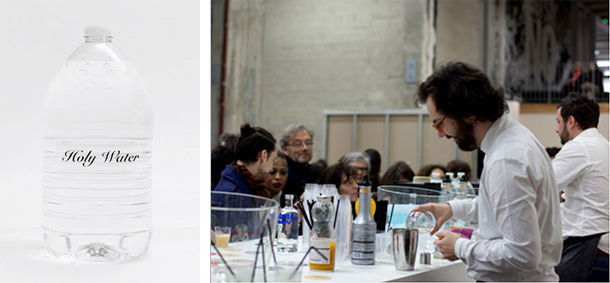
2006-2014, holy water, ice bucket, ice cubes and alcohol.
Exhibition view from Des choses en moins, des choses en plus, Palais de Tokyo, Paris.
Courtesy of the artist.
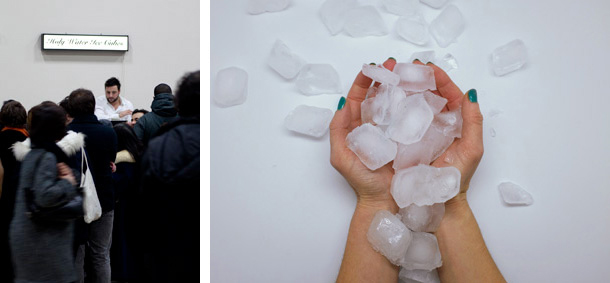
2006-2014, holy water, ice bucket, ice cubes and alcohol.
Exhibition view from Des choses en moins, des choses en plus, Palais de Tokyo, Paris.
Courtesy of the artist.
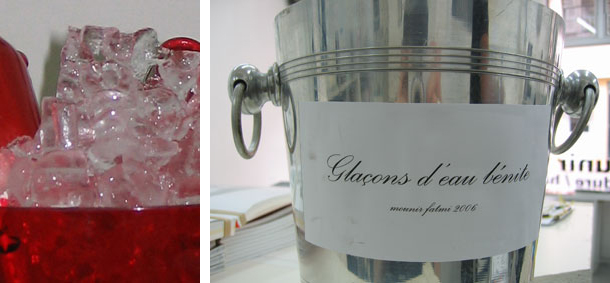
2006, holy water, ice bucket, ice cubes and alcohol
Exhibition view from Tête dure / Hard head, Bank Galerie, 2006, Paris.
Courtesy of the artist.
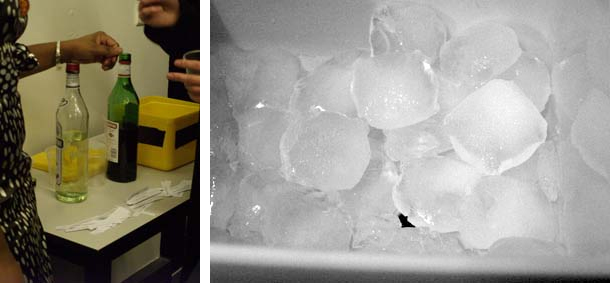
2007, holy water, ice bucket, ice cubes and alcohol.
Exhibition view from Université Paris I Panthéon-Sorbonn, (Im)postures, 2007, Paris.
Courtesy of the artist.
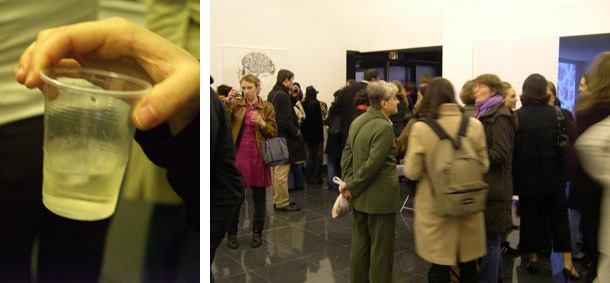
2007, holy water, ice bucket, ice cubes and alcohol.
Exhibition view from Université Paris I Panthéon-Sorbonn, (Im)postures, 2007, Paris.
Courtesy of the artist.
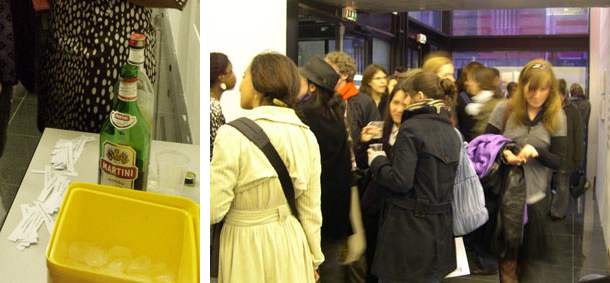
2007, holy water, ice bucket, ice cubes and alcohol.
Exhibition view from Université Paris I Panthéon-Sorbonn, (Im)postures, 2007, Paris.
Courtesy of the artist.
'' The performance calls into question the notions profane and sacred, as well as the relation between religious ritual objects and the beliefs they are associated with. It
questions the transformation of water into a sacred substance, designated as miraculous and for which there is no scientific evidence. ''
Studio Fatmi, October 2014
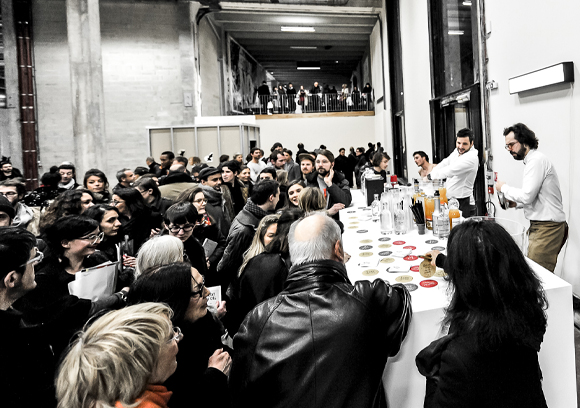
Holy water ice cubes
Exhibition view from Des choses en moins, des choses en plus, Palais de Tokyo, Paris.
Courtesy of the artist.
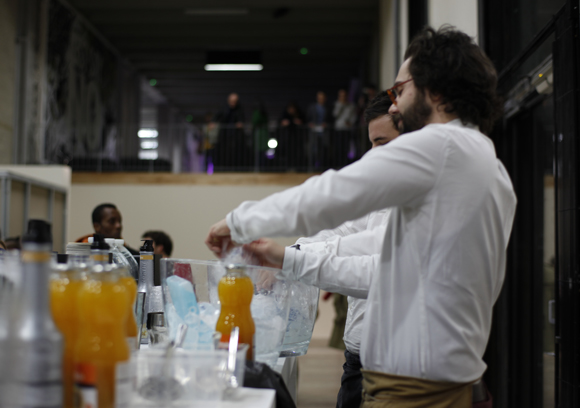
Holy water ice cubes
Exhibition view from Des choses en moins, des choses en plus, Palais de Tokyo, Paris.
Courtesy of the artist.
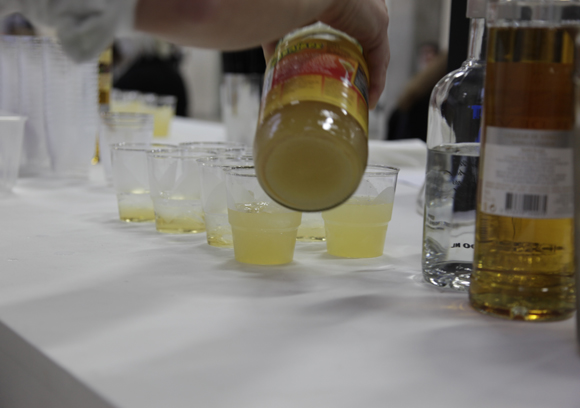
Holy water ice cubes
Exhibition view from Des choses en moins, des choses en plus, Palais de Tokyo, Paris.
Courtesy of the artist.
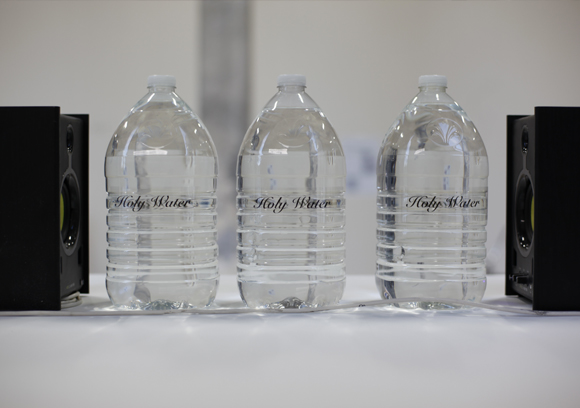
Holy water ice cubes
Exhibition view from Des choses en moins, des choses en plus, Palais de Tokyo, Paris.
Courtesy of the artist.
Holy water ice cubes
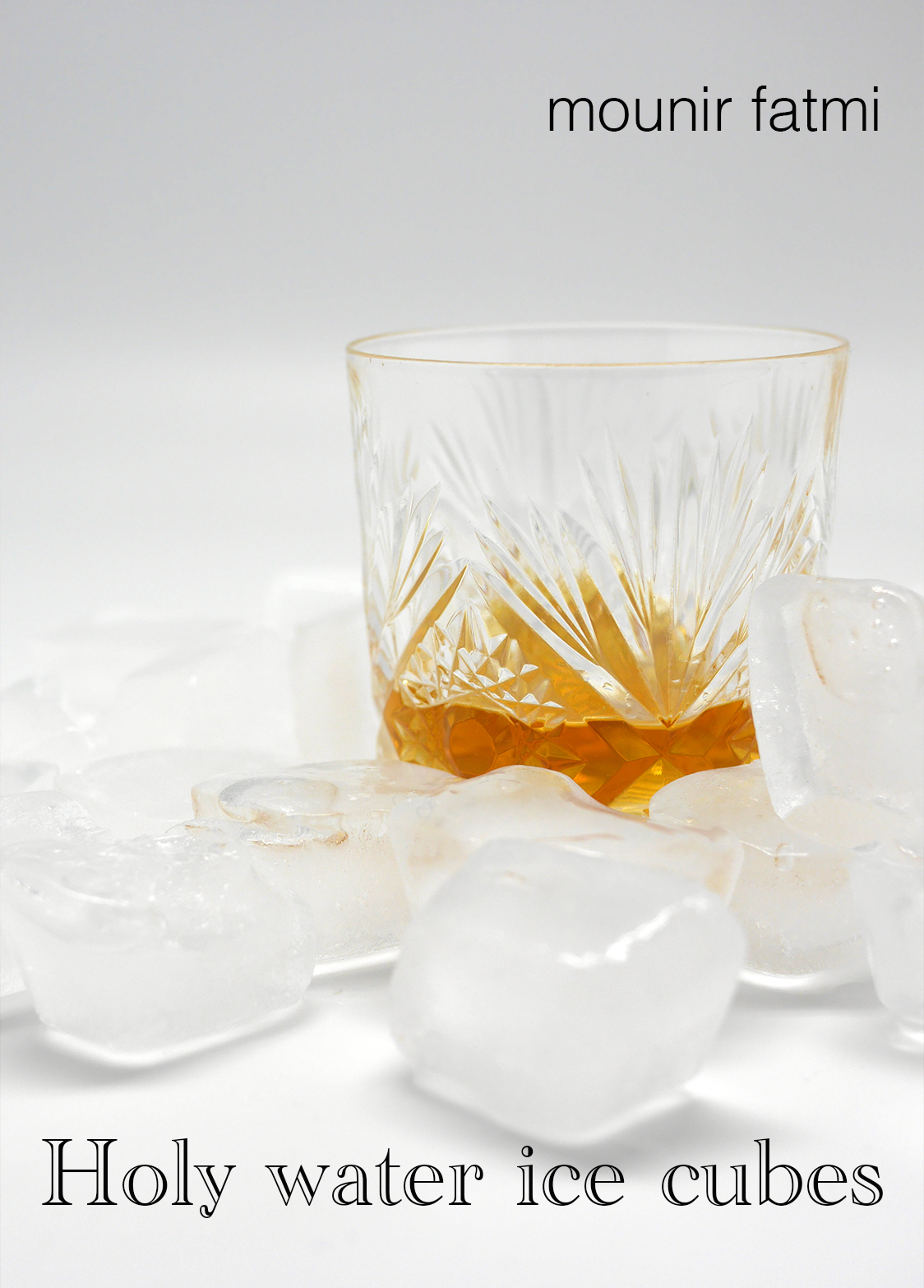
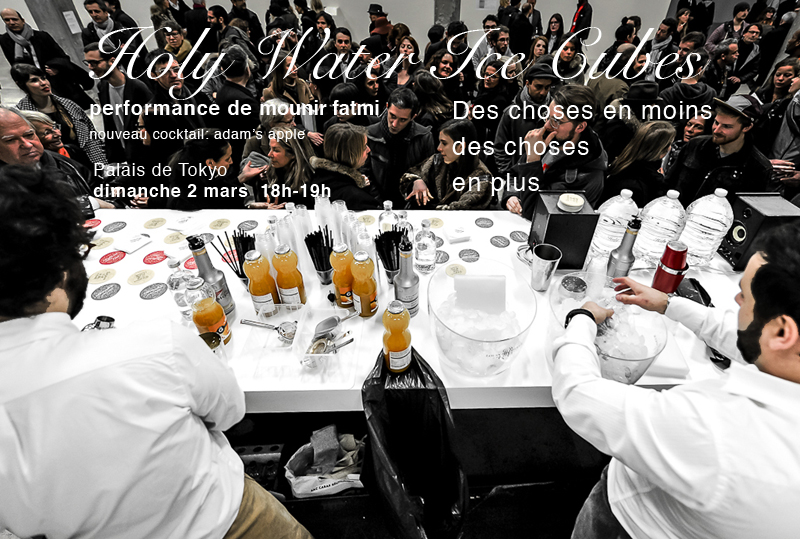
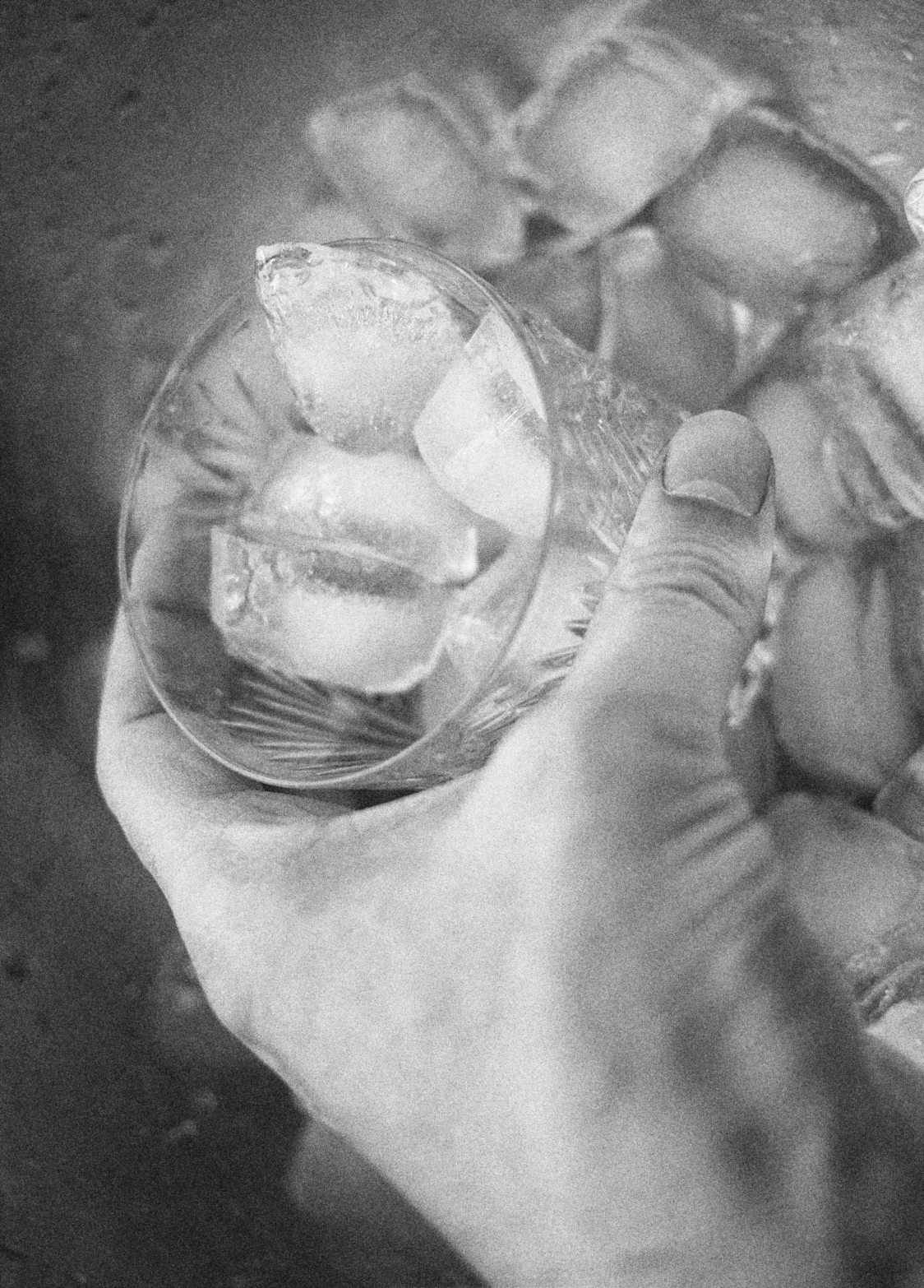
Holy Water Ice Cubes is a performance presented in 2014 at the Palais de Tokyo in Paris, during the exhibit, Des choses en moins, des choses en plus. On this occasion, alcoholic cocktails bearing names with religious and biblical connotations were served to the public, chilled by ice cubes designated as “holy water ice cubes”.
|
|
|
|
|
|
Glaçons d'eau bénite est une performance présentée en 2014 au Palais de Tokyo, pendant la tenue de l'exposition "Des choses en moins, des choses en plus". A cette occasion, des cocktails alcoolisés portant des noms à connotation religieuse et biblique sont proposés au public et les boissons servies sont rafraîchies par de la glace en morceaux désignée comme des "glaçons d'eau bénite".
La performance interroge les notions de profane et de sacré ainsi que les relations entre les objets du rite religieux et les croyances auxquelles ils sont associés. Elle questionne une transformation désignée comme miraculeuse, pour laquelle il n'existe pas d'explication scientifique, à savoir celle de l'eau en substance chargée d'un caractère sacré.
L'eau bénite est une eau naturelle consacrée au service divin par un rite de bénédiction. Il existe différents procédés de préparation de la substance, bien connus et décrits dans le détail par la liturgie catholique : prononciation de prières spécifiques, ajout de sel ou d'herbes, immersion d'un objet en argent dans l'eau etc. La façon dont ça fonctionne en revanche, la manière dont le rite opère et les effets obtenus sur l'eau demeurent mystérieux, inconnus et non observables. Cette transformation miraculeuse est ici questionnée à partir d'un changement d'état de l'eau particulier et désigné en science par le terme de solidification. Il s'agit d'un phénomène et d'une matière extrêmement familiers dont les propriétés physiques, si elles recèlent encore certains mystères, engendrent néanmoins de nombreuses études scientifiques.
La performance met ainsi en regard un phénomène dont l'existence est largement incertaine, désigné comme surnaturel, voire magique et donc se passant d'explications rationnelles, et un phénomène bien réel et connu, observable par tous, que tout le monde peut expérimenter et largement décrit par la littérature scientifique. Phénomène banal en apparence que celui de la transformation de l'eau liquide en glace, auquel on serait tenté d'accorder peu d'attention et de lui préférer des événements en quelque sorte plus extraordinaires, mais pour lequel il existe de nombreuses explications scientifiques d'un niveau de complexité plus ou moins grand, et parfois encore incomplètes. L'association quelque peu sacrilège de l'eau bénite, habituellement consacrée aux cérémonies religieuses, et de l'alcool profane destinés aux divertissements et à l'enivrement, ainsi que l'usage détourné qui en est fait, à savoir son ingestion par le public (et non son aspersion sur lui), son état solide enfin et non liquide, conduisent à une désacralisation de l'objet religieux et à une démystification de ses pouvoirs supposément magiques.
Au sérieux et à la gravité du culte, Glaçons d'eau bénite oppose l'humour et la légèreté des vapeurs d'alcool. Aux recettes approximatives aux effets incertains, la performance préfère la précision détaillée des recettes de cocktails aux résultats ciblés et concrets. Cette association contradictoire ou ironique d'empirisme et de croyance, de mysticisme et d'ivresse a ses fondements historiques dans la mesure où la recherche de spiritualité s’est toujours accompagnée d’une consommation de psychotropes, de drogues ou d’alcool dans le but d’accéder à un autre monde, au-delà de nos sens et de nos catégories de pensée habituelles. Elle s'appuie surtout sur les effets concrets de l'alcool sur les sens plutôt que sur des superstitions dont l'efficacité reste à prouver.
Studio Fatmi, Octobre, 2014 .
|
|
Holy Water Ice Cubes is a performance presented in 2014 at the Palais de Tokyo in Paris, during the exhibit "Des choses en moins, des choses en plus". On this occasion, alcoholic cocktails bearing names with religious and biblical connotations were served to the public, chilled by ice cubes designated as “holy water ice cubes”.
The performance calls into question the notions profane and sacred, as well as the relation between religious ritual objects and the beliefs they are associated with. It questions the transformation of water into a sacred substance, designated as miraculous and for which there is no scientific evidence.
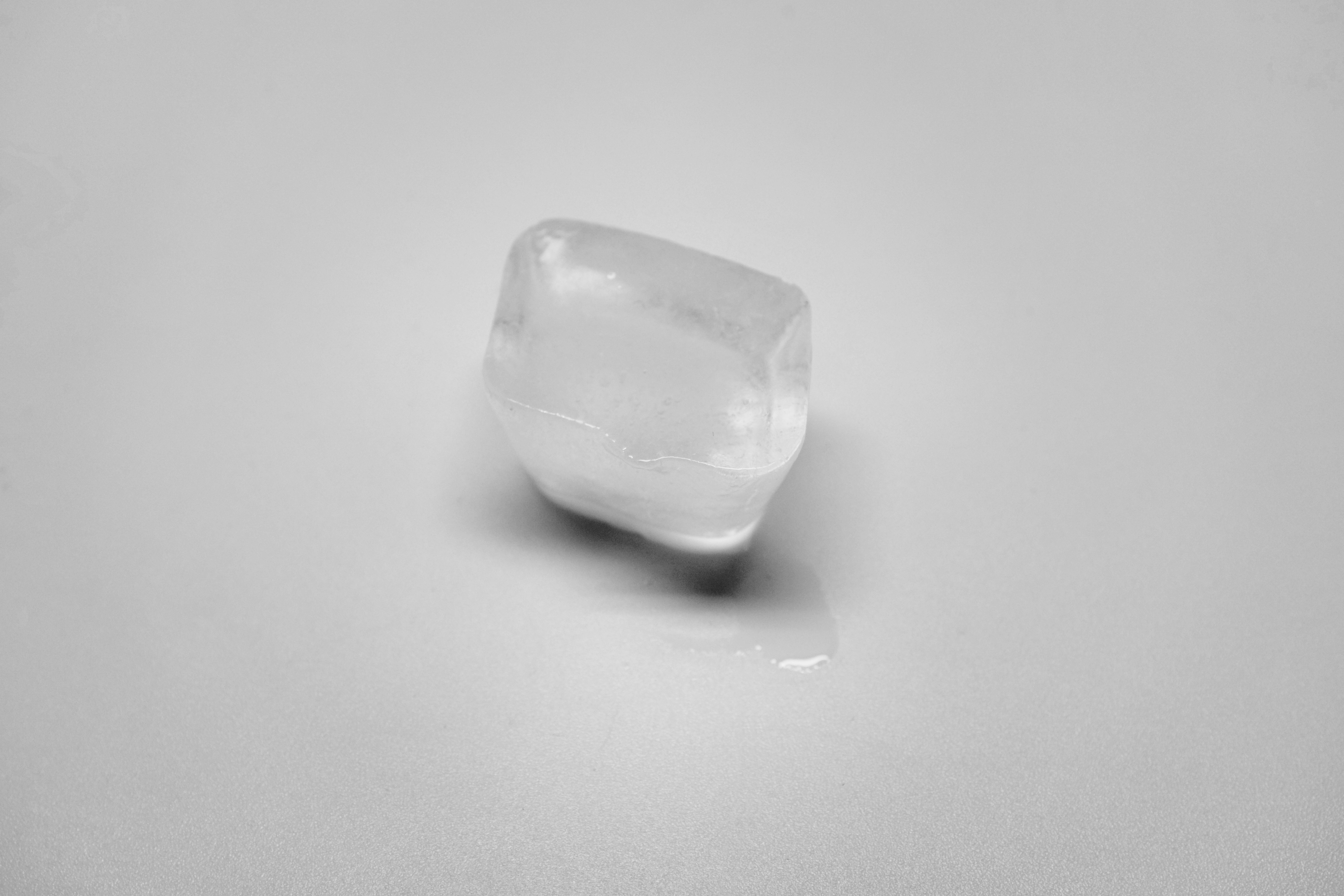
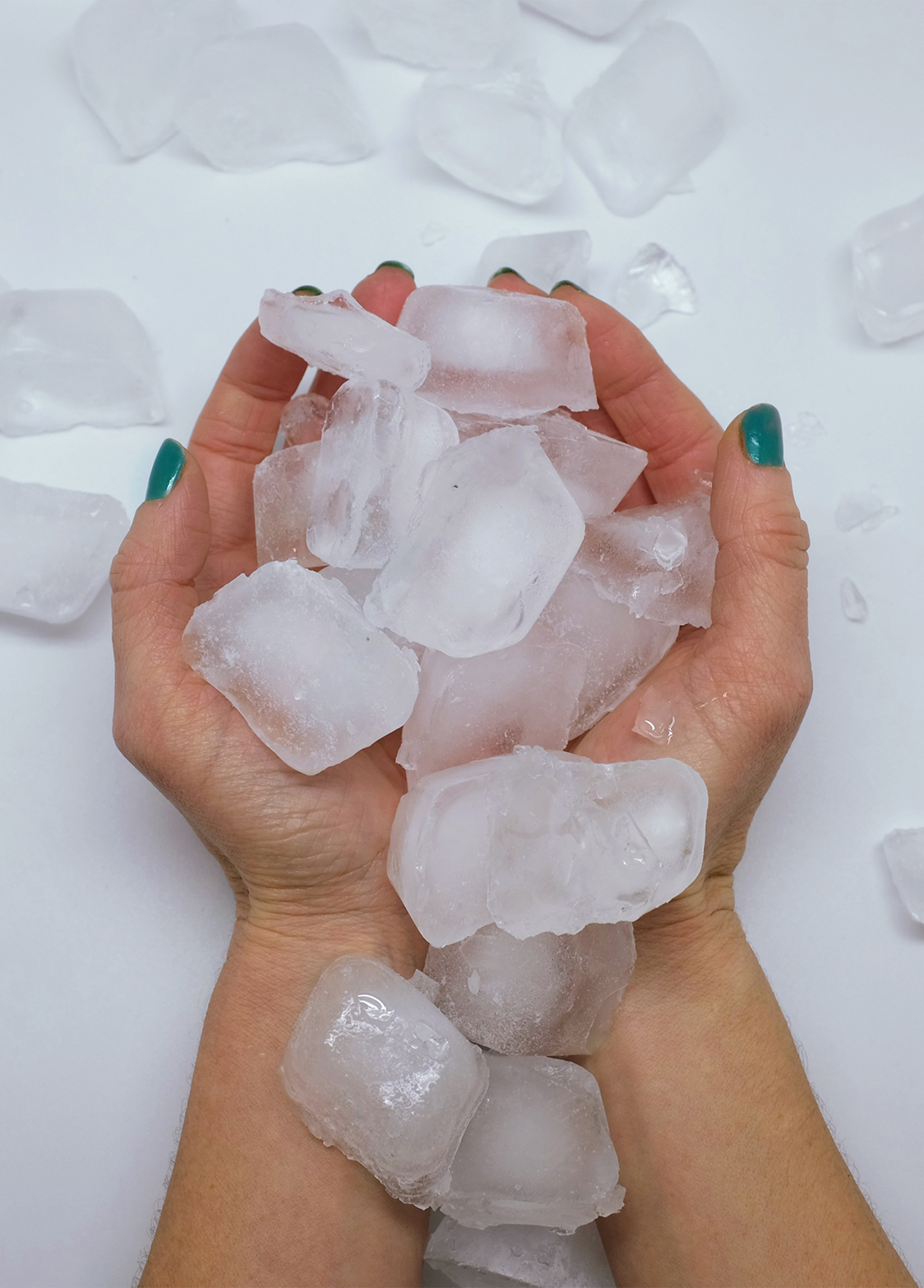
Holy water is natural water consecrated for divine service through a blessing ritual. There are several methods for preparing the substance, described in detail in catholic liturgy: saying specific prayers, adding salt or herbs, immersing a silver object in the water, etc. On the other hand, the way it works, the way the ritual operates and the effects obtained on the water remain mysterious, unknown and unobservable. This miraculous transformation is questioned here, through a particular state change of water that is scientifically designated with the term ‘solidification’. This is a phenomenon and a substance that are extremely familiar and whose physical properties, though they still hold some mystery, have been the object of many scientific studies.
The performance compares a phenomenon whose existence is largely uncertain, designated as supernatural, even magic, and therefore devoid of any rational explanation, with a real and well-known phenomenon, observable by all, that anyone can experience and abundantly described in scientific literature. The transformation of liquid water into ice seems like a banal phenomenon, it’s tempting to not pay much attention to it and prefer more exciting events, yet there are numerous scientific explanations for it with varying levels of complexity, some of which are still incomplete. The somewhat sacrilegious association of holy water, usually destined to religious ceremonies, with the profanity of alcohol which is destined to leisure and inebriation, its diverted use in the sense that it’s ingested by the public instead of being sprinkled upon people, and lastly its solid instead of liquid state lead to a desecration of the religious object and demystification of its supposedly magic powers.
To the seriousness and gravity of worship, Holy Water Ice Cubes opposes humor and the levity of alcohol vapors. Rather than approximate formulas with uncertain effects, the performance opts for detailed cocktail recipes with concrete and specific results. This contradictory or ironic association of empiricism and belief, mysticism and inebriation, has historic foundations in the sense that the quest for spirituality has always gone hand in hand with the consumption of psychotropic substances, drugs or alcohol in order to access another world beyond our senses and usual categories of thought. But most of all, it bases itself on the concrete effects of alcohol on the senses rather than on superstitions whose effectiveness remains to be proved.
Studio Fatmi, October 2014. |
|
|
|